

Custom orthotics for podiatrist recommended use are medical-grade shoe inserts molded directly from a patient's feet to correct alignment, relieve pain, and support long-term foot health. Unlike mass-produced insoles sold at drugstores, these devices start with a professional assessment and a precise foot mold, so they match the exact contours of your feet. As a result, many patients notice relief from chronic heel pain, arch strain, and joint discomfort within weeks of consistent use. This guide explains what podiatrist-recommended orthotics are, how they are made, and how to decide if they are right for you.

A thorough foot exam is the first step toward true custom orthotics for podiatrist recommended use.
Custom Orthotics for Podiatrist Recommended Use: What It Means
Custom orthotics for podiatrist recommended use refers to foot orthotic devices that a licensed podiatrist prescribes or endorses after examining an individual's foot structure and walking pattern. These devices are built from a physical mold of the patient's foot rather than a generic template. Because of that, they typically deliver more targeted support than anything sold off the shelf.
In practice, a podiatrist first identifies the underlying biomechanical problem, whether that is overpronation, a high arch, or an old injury that changed the way someone walks. Afterward, the orthotic design is customized to correct that specific issue rather than simply cushioning the foot. Therefore, patients who receive a podiatrist's direct input tend to see more consistent, measurable improvement than those who buy a one-size-fits-all insole. According to the general definition of orthotics, these devices are designed to support, align, or correct the function of a moving body part, which is exactly the principle podiatrists apply when prescribing custom foot devices.
Why Podiatrists Recommend Custom-Molded Orthotic Support
Podiatrists recommend custom-molded orthotic support for one main reason: generic insoles cannot account for the enormous variation in human foot shape. In contrast, a mold captures every detail of an individual foot, including arch height, heel width, and any bony prominences that need extra padding. For example, a patient with plantar fasciitis needs a different pressure distribution than someone recovering from a bunion procedure, and a custom device can address both scenarios precisely.
Research cited by the American Podiatric Medical Association suggests that a large share of adults experience foot pain severe enough to affect daily activity, and a meaningful portion of that discomfort stems from untreated structural imbalances. Consequently, podiatrists view custom orthotics as a way to treat the root mechanical cause rather than just the symptom. If you are still exploring your options, this overview of why patients choose podiatrist-recommended insoles breaks down the clinical reasoning in more detail.
Common Foot Conditions Treated With Prescription Orthotics
Prescription orthotics are used across a wide range of conditions, not just general foot fatigue. Plantar fasciitis, flat feet, bunions, hammertoes, and diabetic foot complications are among the most common reasons a podiatrist writes an orthotic prescription. In addition, patients with chronic knee, hip, or lower back pain sometimes discover that an uneven gait originating in the foot is a contributing factor.
Because plantar fasciitis involves inflammation of the tissue connecting the heel to the toes, a custom device can redistribute pressure away from the inflamed area while supporting the arch. Similarly, diabetic patients often need orthotics with extra depth and cushioning to reduce the risk of skin breakdown. For a closer look at symptom-specific options, see this guide on what insoles podiatrists suggest for foot pain relief.
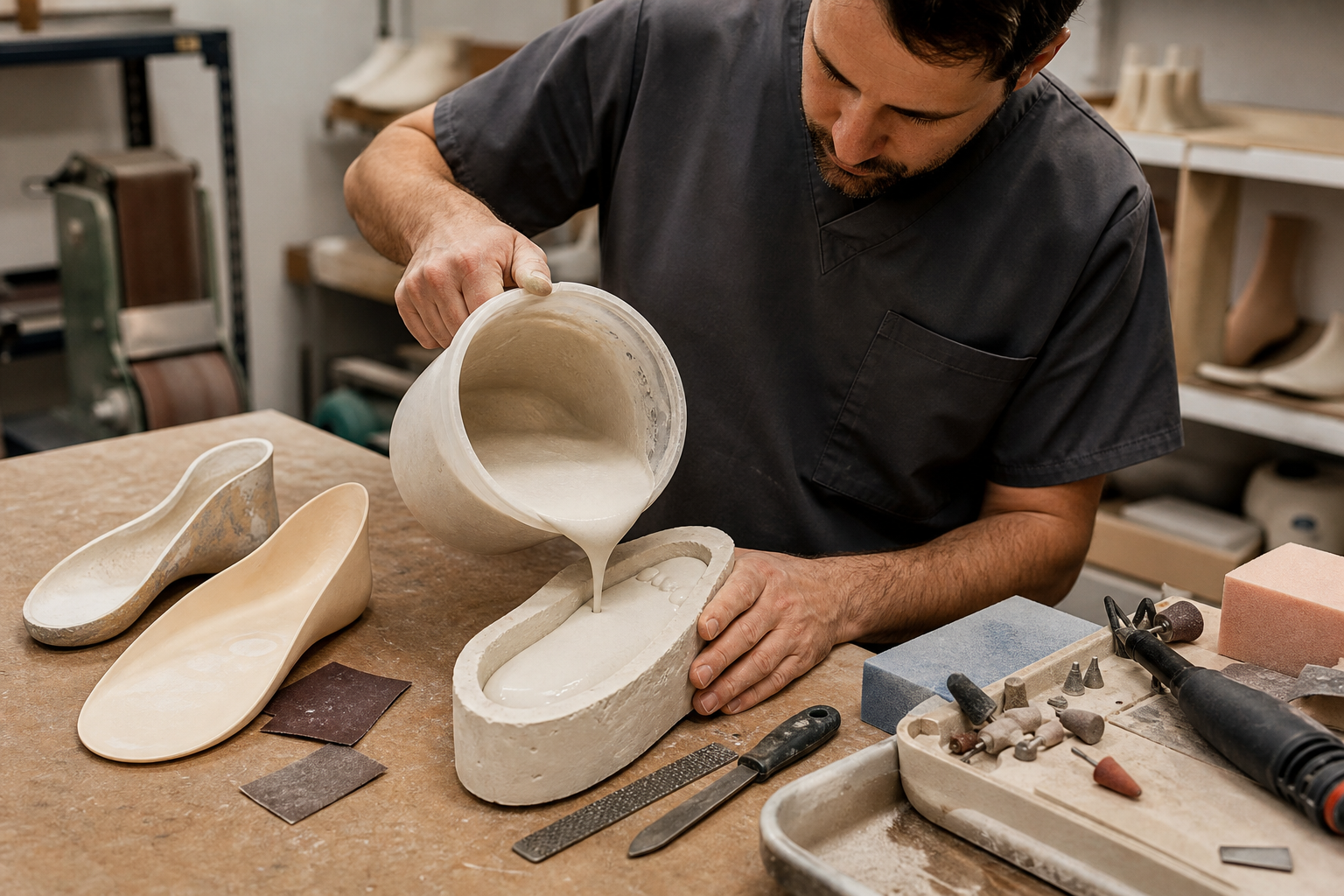
Each orthotic shell is built directly over an individual foot mold rather than a standard template.
How Custom Orthotics Are Made: A Step-by-Step Process
Understanding the fabrication process helps explain why custom orthotics for podiatrist recommended use cost more and perform differently than generic insoles. The process generally follows five clear stages, from the first consultation through the final fitting.
- Schedule a podiatrist consultation. A phone or in-office visit lets the podiatrist review symptoms, medical history, and footwear habits before recommending a design.
- Get a custom foot mold taken. A technician captures an impression using plaster, foam, or digital scanning while the foot is held in a corrected position.
- Lab fabrication of the orthotic shell. A specialized lab builds the shell directly over the mold and adds padding, topcovers, and corrective posts per the prescription.
- Fitting and initial adjustment. The finished orthotics are checked inside everyday or athletic shoes for proper heel placement, arch contact, and comfort.
- Gradual break-in and follow-up. Wear time increases slowly over one to two weeks, followed by a check-in with the podiatrist to confirm symptom relief.
If you are wondering where this process happens locally or remotely, this resource on where to get custom orthotics made from a podiatrist walks through mail-in impression kits and in-person options side by side.
Custom Orthotics vs. Over-the-Counter Insoles
Choosing between a custom device and a drugstore insole often comes down to how specific your foot problem is. The table below compares the two options across the factors that matter most to patients.
| Factor | Custom Orthotics | Over-the-Counter Insoles |
|---|---|---|
| Fit basis | Molded from your exact foot | Generic shoe-size template |
| Clinical input | Podiatrist prescribed | Self-selected |
| Typical cost | $200–$800 per pair | $20–$60 per pair |
| Lifespan | 3–5 years | 6–12 months |
Signs You May Need Podiatrist-Prescribed Orthotics
Not every ache requires a custom device, so it helps to recognize when professional evaluation makes sense. You should consider a consultation if heel or arch pain persists for more than two weeks, if one shoe wears down noticeably faster than the other, or if you notice calluses forming in unusual spots. Similarly, unexplained knee or lower back pain that improves when you change footwear can point to a foot-related cause.
According to data referenced by MedlinePlus, foot and ankle disorders are among the most common musculoskeletal complaints reported in primary care visits. Because early intervention often prevents more serious compensation injuries, it is worth scheduling a consultation before pain becomes chronic rather than waiting until it disrupts daily activity.
Choosing a Provider for Podiatrist-Recommended Custom Orthotics
Once you decide to pursue a custom device, the next question is where to get it made properly. Look for a provider that is podiatrist-owned, offers a direct consultation rather than a quick upsell, and has a verifiable track record of craftsmanship. For instance, customorthotics.com is run by a podiatrist with more than two decades of fabrication experience and carries an A+ rating from the Better Business Bureau, which gives patients a credible option whether they visit locally or order remotely through the website.
Remote ordering has become increasingly practical as well. Many patients now complete a phone consultation, receive a mail-in impression kit, and get a finished device shipped back without ever visiting an office in person. You can browse the full range of custom orthotic products to compare designs before scheduling a consultation, and you can also review this breakdown of whether podiatrist-recommended insoles from customorthotics.com are effective for conditions similar to yours.

Proper fitting is the final step before custom orthotics for podiatrist recommended use start delivering everyday relief.
Frequently Asked Questions About Custom Orthotics for Podiatrist Recommended Use
What is custom orthotics for podiatrist recommended use?
Custom orthotics for podiatrist recommended use are individually molded shoe inserts that a podiatrist prescribes or endorses after evaluating a patient's foot structure and gait. They are fabricated from a direct mold of the foot, so the fit and support match the patient's unique anatomy rather than a generic shoe size.
How do custom orthotics differ from store-bought shoe insoles?
Store-bought insoles are mass-produced in a handful of generic sizes, while custom orthotics are built from an individual foot mold taken by a podiatrist or trained technician. Consequently, custom orthotics typically offer more precise arch support and correction for specific biomechanical issues.
How long does it take to receive custom orthotics after a mold is taken?
Most labs need two to four weeks to fabricate a pair of custom orthotics after receiving the foot mold and prescription. Turnaround time can vary depending on the complexity of the device and the lab's current workload.
How much do podiatrist-recommended custom orthotics usually cost?
Custom orthotics generally range from around $200 to $800 per pair, depending on materials, design complexity, and whether a clinical exam is included. In comparison, over-the-counter insoles usually cost between $20 and $60.
Why do podiatrists recommend custom orthotics instead of generic insoles for many patients?
Podiatrists often recommend custom orthotics because they can target a specific diagnosis, such as plantar fasciitis or overpronation, with precise corrective angles. Generic insoles, by contrast, are designed to fit an average foot shape rather than an individual condition.
What foot conditions can custom orthotics help treat?
Custom orthotics are commonly used to manage plantar fasciitis, flat feet, bunions, diabetic foot complications, and chronic heel or arch pain. They are also used to help correct gait abnormalities that contribute to knee, hip, or lower back discomfort.
How are custom orthotics fabricated from a foot mold?
A podiatrist or technician first takes a physical impression of the foot using plaster, foam, or digital scanning while the foot is held in a corrected position. The lab then builds a rigid or semi-rigid shell over that mold and adds topcovers and padding based on the prescription.
Can I order custom orthotics online without visiting a podiatrist in person?
Yes, many practices, including customorthotics.com, offer remote consultations and mail-in impression kits so patients outside the local area can still receive a properly fitted device. A phone consultation with a podiatrist is typically included to review symptoms and confirm the correct design before fabrication begins.
What common mistakes should I avoid when using new custom orthotics?
One common mistake is wearing orthotics for a full day immediately instead of gradually breaking them in over one to two weeks. Another is placing custom orthotics into shoes that do not have enough interior room, which can distort the intended support.
How long do custom orthotics typically last before needing replacement?
With regular use, most custom orthotics last between three and five years before the materials compress or the shell loses its corrective shape. However, active patients or those with progressive foot conditions may need a replacement sooner.
Are custom orthotics covered by health insurance?
Coverage varies widely by insurer and plan, but many insurance providers will reimburse part of the cost when the orthotics are prescribed by a licensed podiatrist for a diagnosed medical condition. Patients should confirm orthotic coverage details directly with their insurance provider before ordering.
What is the best way to break in new custom orthotics?
The best approach is to wear the orthotics for two to three hours on the first day, then gradually increase wear time by an hour or two each following day. This gradual approach allows the foot and surrounding muscles to adapt to the new alignment without soreness.
Final Thoughts on Podiatrist-Recommended Orthotics
Ultimately, custom orthotics for podiatrist recommended use offer a level of precision that generic insoles simply cannot replicate, because they are built from your own foot mold and guided by a clinical diagnosis. Whether you are managing plantar fasciitis, correcting a structural imbalance, or just trying to stay active without pain, a podiatrist-directed process gives you the best chance at a lasting fix. If you are ready to take the next step, a complimentary consultation through customorthotics.com is a practical way to get expert input before committing to a device.
