

Custom arch support is a clinically prescribed, individually fabricated orthotic device built from an exact mold or digital scan of your foot. It corrects biomechanical imbalances, redistributes ground reaction forces, and resolves the root causes of chronic foot, ankle, knee, hip, and lower back pain — none of which a generic insole can accomplish. If you've been living with recurring foot pain, understanding how custom arch support works and why it outperforms every over-the-counter alternative is the first step toward real, lasting relief.
An estimated 77% of Americans experience foot pain at some point in their lives, yet the majority never receive a proper biomechanical evaluation. For many, the solution isn't rest or retail insoles — it's custom arch support designed to address their unique foot anatomy from the ground up.
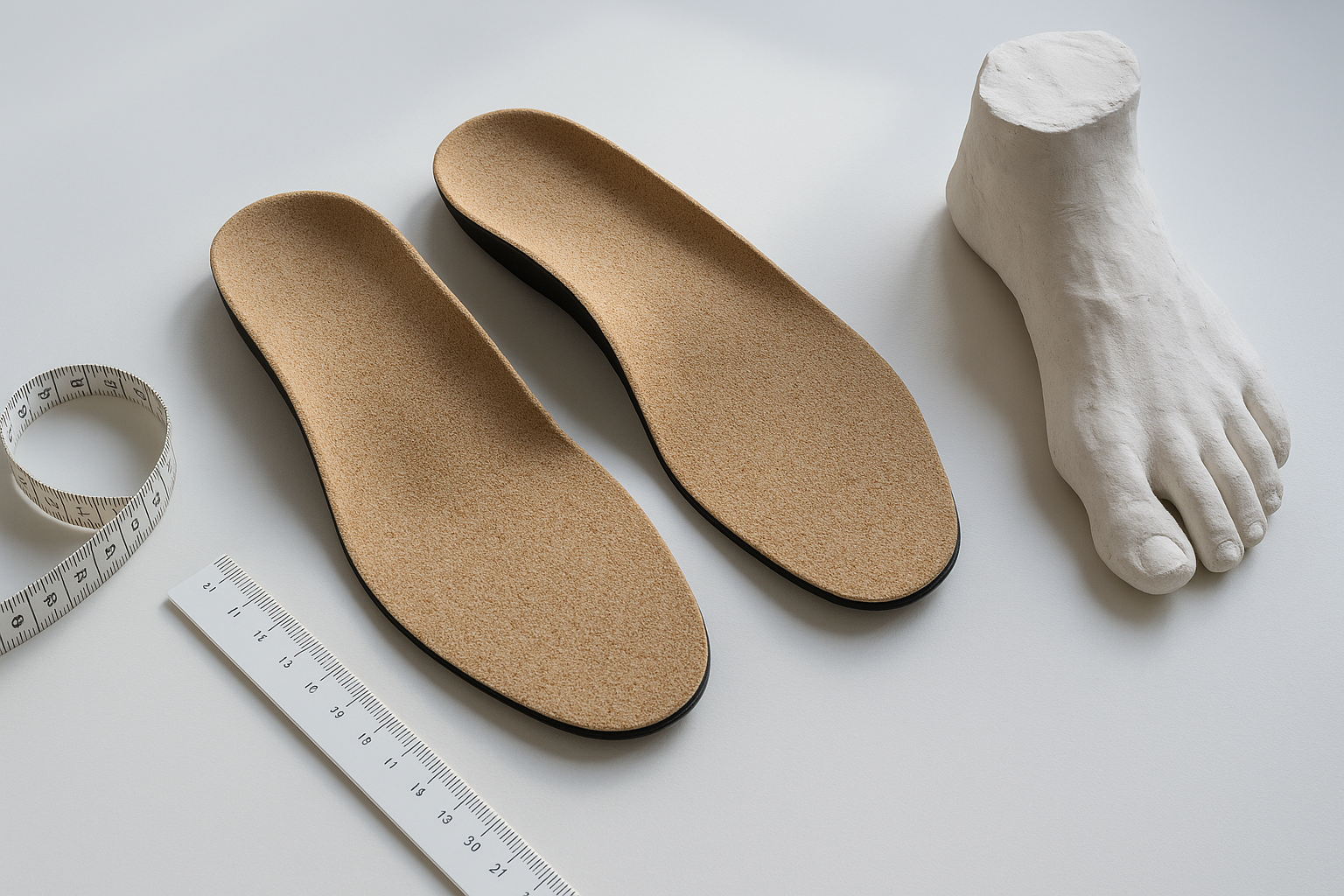
Custom arch support orthotics are individually fabricated using precise foot measurements or 3D scans for a perfect fit.
What Is Custom Arch Support — and How Is It Different?
Your foot contains 26 bones, 33 joints, and over 100 muscles, tendons, and ligaments — all working in concert to carry your entire body weight with every step. The arch is the structural keystone of this system. When it functions correctly, it absorbs shock, stabilizes lateral movement, and transfers propulsive force efficiently.
When the arch is compromised — whether too flat, too high, or asymmetrical — the entire kinetic chain above it compensates poorly. Pressures that should be distributed become concentrated. Joints that should move freely become strained. The result is pain that often shows up not just in the foot, but in the knees, hips, and lumbar spine.
Custom arch support corrects this dysfunction at its source. Unlike anything you can buy at a pharmacy or big-box store, a custom orthotic is:
- Fabricated from a precise cast or scan of your individual foot — not an average foot template
- Prescribed after a clinical biomechanical evaluation — not guessed at from a size chart
- Engineered to correct your specific structural abnormality — not designed to feel generically comfortable
- Made from medical-grade materials selected for your activity level and condition — not mass-produced foam
The analogy holds perfectly: a custom orthotic is to a drugstore insole what prescription eyeglasses are to a pair of reading glasses from a convenience store rack. Both sit on your face, but only one is made for your vision.
Custom Arch Support vs. Over-the-Counter Insoles: A Direct Comparison
One of the most important decisions you'll make for your foot health is understanding when a store-bought insole is sufficient and when only custom arch support will do. Here is a detailed, honest comparison:
The competitive landscape also includes "semi-custom" kiosk orthotics — devices sold in mall kiosks or sporting goods stores using a pressure plate scan. These occupy a middle ground: better than generic foam insoles, but far inferior to true custom arch support because they are not made from a full clinical evaluation and lack the precision fabrication that addresses your specific biomechanical faults. Research published in the Journal of the American Podiatric Medical Association consistently supports clinically fabricated custom orthotics over prefabricated alternatives for managing structural foot conditions.
What Conditions Does Custom Arch Support Treat?
A comprehensive range of musculoskeletal conditions respond to custom arch support. Below is a detailed breakdown of the most common diagnoses and how orthotics address each one:
Plantar Fasciitis
The most common cause of heel pain. Custom arch support reduces tension on the plantar fascia by correcting the arch collapse or excessive pronation that overstretches the ligament with each step.
Flat Feet (Pes Planus)
When the arch collapses during weight-bearing, the foot pronates excessively. Custom orthotics provide medial arch support to restore proper foot posture and reduce strain on the posterior tibial tendon.
High Arches (Pes Cavus)
High arches concentrate pressure on the heel and metatarsal heads. Accommodative custom arch support redistributes load across the full plantar surface, relieving pain in these focal pressure points.
Overpronation
Excessive inward rolling of the ankle during gait stresses the knee, hip, and lower back. Functional custom orthotics control rearfoot valgus and realign the subtalar joint to prevent this cascade of compensatory strain.
Heel Spurs
Bony calcium deposits at the heel cause sharp, stabbing pain with each step. Custom orthotics offload the heel with targeted cushioning while correcting the mechanical causes that led to spur formation.
Metatarsalgia
Inflammation and pain in the ball of the foot caused by excess metatarsal pressure. Custom orthotics incorporate metatarsal pads or bars to redistribute forefoot loading and reduce pain during push-off. For a deeper walkthrough, see our Consult a Podiatrist for Foot Pain: The Complete Guide to When, Why & What to Ex.
Shin Splints & Tibial Stress
Common in runners and athletes, medial tibial stress syndrome is often worsened by overpronation. Custom arch support controls abnormal foot motion, reducing the repetitive stress that inflames the tibial periosteum.
Diabetic Foot Conditions
Diabetic neuropathy and peripheral vascular disease make pressure ulcers and foot injuries especially dangerous. Accommodative custom orthotics protect vulnerable areas by evenly distributing plantar pressure and preventing focal skin breakdown.
Chronic Knee, Hip & Back Pain
Foot misalignment ripples upward through the entire kinetic chain. Correcting foot mechanics with custom arch support frequently provides measurable relief from knee osteoarthritis, iliotibial band syndrome, and sacroiliac joint pain.
Leg Length Discrepancy
Even a small difference in leg length (as little as 5mm) causes compensatory pelvic tilt and spinal curvature. Custom orthotics with heel lifts can correct functional leg length inequalities and reduce the compensatory strain.
Types of Custom Orthotics: Functional vs. Accommodative
Not all custom arch support devices serve the same purpose. Clinicians select from two primary categories based on whether the goal is motion control or pressure relief:
Functional (Rigid/Semi-Rigid) Orthotics
Purpose: Control abnormal foot motion — overpronation, supination, excessive rearfoot valgus.
Materials: Polypropylene, carbon fiber, graphite composites.
Conditions treated: Plantar fasciitis, shin splints, Achilles tendinitis, adult-acquired flatfoot.
Best footwear: Athletic shoes, structured walking shoes, work boots.
Accommodative (Soft/Cushioned) Orthotics
Purpose: Redistribute plantar pressure and protect sensitive areas rather than control motion.
Materials: EVA foam, soft leather, silicone, Plastazote.
Conditions treated: Diabetic foot ulcers, rheumatoid arthritis, painful calluses, heel spurs.
Best footwear: Extra-depth shoes, diabetic footwear, orthopedic shoes.
A third hybrid category — semi-rigid orthotics — blends a rigid shell for motion control with a soft top cover for cushioning. These are frequently prescribed for athletes and active individuals who need both correction and comfort across high-demand activities.
Specialty orthotics are also available for specific footwear contexts, including:
- Sport-specific orthotics — for running, cycling, skiing, and cleated shoes
- Dress shoe orthotics — slim-profile devices for dress and fashion footwear
- Pediatric orthotics — scaled for growing feet with frequent reassessment built into the treatment plan
- Post-surgical orthotics — designed to protect and offload tissue during recovery from foot or ankle procedures
How the Custom Arch Support Fitting Process Works — Step by Step
Obtaining custom arch support is a structured clinical process — not a single appointment. Here is every stage explained in full detail:
-
Step 1 — Biomechanical Evaluation
A podiatrist, orthopedic specialist, or certified pedorthist performs a thorough assessment. This includes gait analysis (watching you walk), static posture evaluation, range-of-motion testing of the ankle and subtalar joints, and assessment of any associated pain sites in the knee, hip, or spine. Some clinics use computerized pressure plate (pedobarograph) analysis to map plantar pressure distribution.
-
Step 2 — Foot Capture (Casting or Scanning)
The clinician captures a precise three-dimensional representation of your foot using one of three established methods: plaster casting (submerging the foot in plaster to create a negative mold), foam impression box (pressing the foot into a compressible foam block that retains its shape), or 3D digital scanning (using structured-light or laser technology to generate a millimeter-accurate digital model). The 3D scan method is increasingly the standard due to its precision and the ability to capture the foot in the optimal neutral subtalar position.
-
Step 3 — Prescription Writing
The clinician writes a detailed orthotic prescription specifying shell material, thickness, heel cup depth, arch height, any intrinsic or extrinsic posting (wedges to control rearfoot or forefoot position), top cover material, and any special modifications such as metatarsal pads, heel lifts, or Morton's extension cutouts. This prescription is what separates a true custom device from anything available over the counter.
-
Step 4 — Laboratory Fabrication
The cast data and prescription are submitted to an orthotic fabrication laboratory, where certified orthotists manufacture the device. Depending on the lab and complexity of the prescription, fabrication typically takes one to three weeks. The orthotics are then shipped back to the prescribing clinic for dispensing.
-
Step 5 — Dispensing and Fitting
At a follow-up appointment, the clinician places the finished orthotics in your footwear and confirms proper fit. You walk with them while the clinician observes your gait. Minor adjustments — grinding material to reduce pressure points, adding padding, or modifying posting angles — are frequently made at this visit.
-
Step 6 — Break-In and Follow-Up
You begin a graduated wear schedule (detailed in the next section). A follow-up visit at four to six weeks allows the clinician to assess your response, address any comfort issues, and confirm the therapeutic goals are being met. Most providers offer one or two adjustment visits at no additional cost during this period.
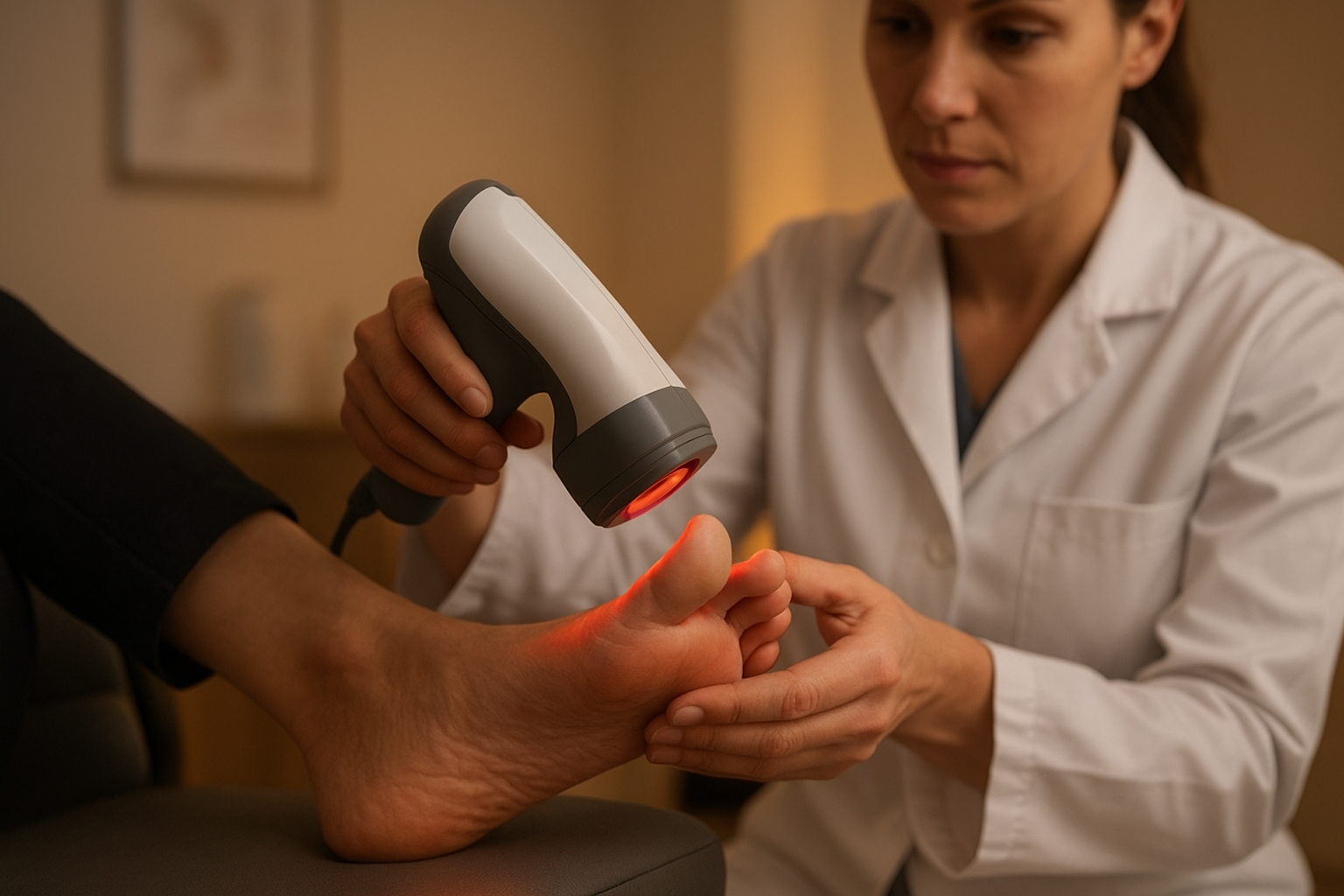
Modern 3D scanning technology allows clinicians to capture precise foot measurements for fabricating accurate custom arch support devices.
The Break-In Period: What to Expect and How to Manage It
Custom arch support actively changes how your foot functions — and your muscles, tendons, and joints need time to adapt to that change. Expecting immediate, effortless comfort on day one is the number one misconception among first-time orthotic wearers.
The standard recommended break-in schedule is:
Weeks 1–2: Gradual Introduction
Wear the orthotics for 1–2 hours on day one, adding approximately one hour per day. Remove them if any sharp discomfort occurs. Most people experience mild arch or calf fatigue during this phase — this is normal and indicates your muscles are engaging differently.
Weeks 3–4: Increasing Use
By the start of week three, most people are comfortable wearing orthotics for 4–6 hours per day. Begin wearing them during your primary activity (walking, work, exercise). Soreness should be mild and decreasing.
Week 4 and Beyond: Full-Time Wear
Most wearers achieve comfortable full-time use by week four. If you haven't reached full comfort by week six, contact your provider — the orthotic may need modification.
Warning signs that require a return visit: Sharp or pinching pain in any specific location, increased swelling, skin blisters or pressure sores, pain that worsens rather than decreases over the break-in period. These indicate a fitting problem, not a failure of the orthotic concept.
How Long Do Custom Arch Support Orthotics Last?
High-quality custom arch support orthotics typically last two to five years — but this depends on several factors that most patients are never told about:
- Shell material: Rigid polypropylene or carbon fiber shells last longer than EVA foam or softer accommodative materials, which compress and lose their properties faster under body weight.
- Activity level: A runner logging 30 miles per week will wear out an orthotic two to three times faster than a sedentary office worker.
- Body weight: Higher body mass accelerates material compression, particularly in softer orthotic types.
- Top cover wear: The top cover (the fabric or foam layer you stand on) typically needs replacement every 12–18 months even if the shell is still effective. Your provider can re-cover the shell at a fraction of replacement cost.
- Foot changes: Weight gain, pregnancy, aging, or surgery can change foot shape enough to require a new prescription — even if the old orthotic hasn't physically worn out.
Annual review appointments are the professional standard. Your clinician will assess the device for structural integrity, evaluate whether your foot biomechanics or condition have changed, and recommend refurbishment, modification, or replacement as needed.
Cost, Insurance Coverage, and How to Maximize Value
The cost of custom arch support orthotics typically ranges from $200 to $800 for a pair, with variation driven by the type of orthotic, the materials used, the geographic market, and whether follow-up fittings are bundled into the fee.
Insurance Coverage
- Private health insurance: Most plans cover custom orthotics when prescribed by a licensed physician for a diagnosed, medically documented condition (e.g., plantar fasciitis, flat feet, diabetic neuropathy). Coverage typically ranges from 50%–80% after deductible. Always obtain a detailed Letter of Medical Necessity from your provider before submitting a claim.
- Medicare Part B: Covers therapeutic shoe inserts for beneficiaries with diabetes under the Therapeutic Shoe Bill (HCPCS codes A5500–A5513). Standard custom orthotics may be covered as Durable Medical Equipment if medically necessary and prescribed appropriately.
- FSA / HSA: Custom orthotics purchased with a physician's prescription qualify as eligible medical expenses under both Flexible Spending Accounts and Health Savings Accounts — a significant tax advantage.
- Workers' compensation: If your foot condition is work-related (e.g., standing on concrete all day), custom arch support may be fully covered under workers' compensation claims.
The True Cost Comparison
A single pair of custom orthotics at $400 — used for three years — costs roughly $11 per month. In contrast, replacing $40 drugstore insoles every four months costs $120 per year ($360 over three years) for a product that never actually corrects the underlying problem. When you factor in the avoided cost of physical therapy sessions ($80–$150 each), corticosteroid injections ($200–$400), or surgical intervention ($5,000–$25,000+), the economic case for custom arch support becomes compelling.
Choosing the Right Footwear for Custom Arch Support
Even the best custom arch support orthotic is compromised if it's placed in the wrong shoe. Getting this combination right is critical to your outcomes.
What to Look for in Orthotic-Compatible Shoes
- Removable footbed / sock liner: The factory insole must come out to make room for your custom orthotic. If the insole is glued in, the shoe won't work.
- Sufficient internal depth: Extra-depth shoes (typically an additional 3/8" to 5/8" over standard) accommodate thicker custom devices without compressing the toes.
- Firm, supportive midsole: A stability or motion-control shoe works in concert with your orthotic. Maximalist cushioned shoes (like thick stack-height "cloud" shoes) can interfere with the orthotic's corrective geometry.
- Secure heel counter: A rigid heel counter prevents the foot from sliding laterally in the shoe, which would undermine the orthotic's rearfoot control.
- Wide toe box: Enough forefoot volume to prevent digital crowding when the orthotic occupies floor space in the shoe.
Footwear Categories That Work Well
- Athletic running and walking shoes (stability or neutral category)
- Work boots and safety footwear (steel-toe models with removable liners)
- Extra-depth diabetic or orthopedic footwear
- Many lace-up dress and casual shoes with adequate depth
Footwear that doesn't work well: slip-on mules, shallow dress pumps, flip-flops, sandals without straps, and minimalist zero-drop shoes. If your daily footwear falls into these categories, discuss specialty slim-profile orthotics or footwear modifications with your provider.
Custom Arch Support for Athletes and Active Individuals
Athletes place significantly higher biomechanical demands on their feet than the general population. For runners, the foot strikes the ground approximately 1,500 times per mile with impact forces equal to two to three times body weight. For field sport athletes, rapid lateral cutting movements add torsional stresses that compound any existing structural vulnerability.
Custom arch support for athletes differs from standard clinical orthotics in several important ways: For a deeper walkthrough, see our Children's Custom Orthotics: A Parent's Complete Guide.
- Carbon fiber shells are often preferred for running orthotics because they are thin enough to fit in low-profile athletic shoes while offering superior rigidity and energy return.
- Activity-specific posting accounts for the dynamic foot position during running (where the foot spends more time in a different loading phase compared to walking).
- Gait analysis at running speed — not just walking — captures biomechanical issues that only emerge under high-speed loading.
- Injury prevention is often the primary goal for athletes, even before chronic pain develops. Addressing early-stage overpronation, supination, or leg length discrepancy proactively prevents stress fractures, IT band syndrome, and patellar tendinopathy.
Elite sports medicine clinics use force plate gait laboratories and high-speed video analysis to capture data that informs these sport-specific prescriptions — a level of precision far beyond what any over-the-counter product can emulate.
Custom Arch Support for Children: What Parents Need to Know
Pediatric foot conditions are more common than many parents realize. A significant percentage of children with flat feet will not self-correct as previously believed, and early intervention with custom arch support can prevent the development of compensatory knee and back problems in adulthood.
When to Seek Evaluation for a Child
- Flat feet that persist beyond age 6 and cause pain during activity
- In-toeing or out-toeing gait patterns that don't improve with age
- Complaints of leg or knee pain after sports or play
- Unusual shoe wear patterns (excessive heel or inner-edge wear)
- A family history of foot or lower limb problems
Important consideration for parents: Children's feet grow rapidly, meaning custom orthotics typically need to be replaced every 12–18 months rather than the 2–5 years that applies to adults. Factor this into your budgeting and ask your provider whether a semi-rigid design (which may tolerate minor growth changes slightly better) is appropriate.
7 Mistakes That Undermine Your Custom Arch Support Results
Even well-fabricated custom orthotics fail to deliver results when patients make these avoidable errors:
- Skipping the clinical evaluation — Purchasing kiosk-generated or mail-order "custom" insoles bypasses the biomechanical diagnosis that makes true custom arch support effective. These products are not the same as clinician-prescribed orthotics.
- Using incompatible footwear — Placing a corrective orthotic in a shoe without a removable insole or with inadequate depth neutralizes its function and can even worsen discomfort.
- Abandoning the break-in schedule — Wearing orthotics for a full day on week one or giving up because of initial soreness are both mistakes. The graduated schedule exists for physiological reasons, not preference.
- Inconsistent daily wear — Wearing orthotics only on some days significantly slows adaptation and reduces cumulative therapeutic benefit. Consistent daily wear is essential during the treatment phase.
- Never returning for adjustments — Most orthotics require at least one modification appointment. Accepting persistent discomfort as inevitable means missing an easy fix.
- Failing to replace worn devices — An orthotic that has lost its structural integrity provides no therapeutic benefit — yet many patients continue wearing the same pair for five or more years without assessment.
- Treating orthotics as a standalone solution — For many conditions, custom arch support is most effective as part of a broader treatment plan that includes stretching, strengthening, physical therapy, and appropriate footwear. Orthotics complement rehabilitation — they don't replace it.
Is Custom Arch Support Right for You?
Custom arch support is almost certainly the right choice if any of the following apply to you:
- You have recurring foot, heel, ankle, knee, hip, or lower back pain that has not resolved with rest, stretching, or over-the-counter insoles
- A healthcare provider has identified flat feet, overpronation, high arches, or a leg length discrepancy
- You have been diagnosed with plantar fasciitis, Achilles tendinitis, or metatarsalgia that hasn't responded to conservative treatment
- You have diabetes with neuropathy and are at risk of foot ulceration
- You stand or walk on hard surfaces for extended periods as part of your work
- You are an athlete experiencing repetitive injury patterns linked to lower limb mechanics
If your discomfort is mild, recent (less than a few weeks), and clearly tied to a specific, temporary cause — an unusually long hike, for example — a quality OTC insole may bridge the gap short-term. But for any structural, chronic, or recurring condition, the investment in a professional evaluation and custom arch support is unambiguous.
Custom arch support is not a luxury upgrade — it is a precision medical device. For patients with genuine biomechanical dysfunction, it provides a level of targeted correction that simply cannot be replicated by any mass-produced product, regardless of price. You can explore professional custom orthotic options and learn more at customorthotics.com.
With properly fitted custom arch support, everyday walking becomes more comfortable, efficient, and pain-free.
Frequently Asked Questions About Custom Arch Support
What is custom arch support and how does it differ from regular insoles?
Custom arch support is a clinically prescribed orthotic device individually fabricated from a precise mold or 3D scan of your foot to correct specific biomechanical faults, redistribute plantar pressure, and relieve structural pain. Unlike generic insoles — which are mass-produced to fit an average foot template — custom arch support is engineered to your unique foot anatomy and prescribed for your diagnosed condition.
Who needs custom arch support?
People with flat feet, high arches, overpronation, plantar fasciitis, heel spurs, Achilles tendinitis, metatarsalgia, diabetic neuropathy, shin splints, or chronic knee, hip, and lower back pain linked to foot misalignment are strong candidates. A podiatrist, orthopedic specialist, or certified pedorthist can confirm whether custom arch support is clinically appropriate for your situation.
How does custom arch support actually work to relieve pain?
Custom arch support works by guiding the foot into a biomechanically optimal position, redistributing ground reaction forces evenly across the plantar surface, reducing stress on inflamed or overloaded structures (tendons, ligaments, joint cartilage), and controlling abnormal motion patterns like overpronation or supination. This corrects the root mechanical cause of pain rather than simply masking symptoms.
What is the process for getting custom arch support orthotics?
The process involves six steps: a biomechanical evaluation by a clinician, a foot capture (via plaster cast, foam impression, or 3D digital scan), a detailed prescription written by the clinician, laboratory fabrication (1–3 weeks), a dispensing and fitting appointment, and a break-in period with follow-up adjustments. Each step is essential to ensuring the device addresses your specific biomechanical needs.
How much does custom arch support cost and is it covered by insurance?
Custom arch support orthotics typically cost $200–$800 per pair. Many private health insurance plans cover 50%–80% of the cost when a physician prescribes them for a diagnosed condition. Medicare Part B covers inserts for diabetic patients. FSA and HSA funds can be used for custom orthotics with a physician's prescription. Workers' compensation may cover them for occupational foot conditions.
How long do custom arch support orthotics last?
High-quality custom orthotics last 2–5 years depending on the shell material, your activity level, and your body weight. Top covers typically need replacement every 12–18 months. Annual review appointments allow your clinician to assess the device's integrity and determine whether modification or replacement is needed. Significant changes in weight, foot shape, or activity should also trigger a reassessment.
Can custom arch support help with plantar fasciitis?
Yes — custom arch support is one of the most clinically supported conservative treatments for plantar fasciitis. It reduces strain on the plantar fascia by correcting the arch collapse or excessive pronation that overstretches the ligament, redistributes pressure away from the inflamed heel insertion point, and addresses the structural root cause rather than just managing symptoms.
What is the break-in period for custom arch support?
Most people need 3–4 weeks to fully adapt to custom arch support. The standard protocol starts at 1–2 hours of wear on day one, increasing by approximately one hour per day through the first two weeks. By weeks three and four, most wearers reach comfortable full-time use. Sharp pain, blisters, or worsening symptoms should prompt a return visit for adjustment.
Are kiosk or mail-order "custom" orthotics the same as clinician-prescribed custom arch support?
No. Kiosk pressure-plate scans and mail-order foam impression kits produce devices that are better than generic insoles but fall well short of true custom arch support. They lack the clinical biomechanical evaluation that identifies the specific fault to be corrected, and their fabrication does not meet the same precision standards as lab-fabricated clinical orthotics.
Can children use custom arch support?
Yes. Children with persistent flat feet (beyond age 6), in-toeing, out-toeing, or structural concerns that cause pain during activity can benefit from pediatric custom arch support. Because children's feet grow rapidly, orthotics typically need reassessment and replacement every 12–18 months. Early intervention can prevent the development of compensatory knee and back problems in adulthood.
What types of shoes work best with custom arch support?
Shoes with a removable insole, adequate internal depth, a firm midsole, a rigid heel counter, and a wide toe box work best with custom arch support. Athletic stability shoes, work boots, extra-depth orthopedic footwear, and structured walking shoes are excellent choices. Slip-on mules, shallow pumps, flip-flops, and minimalist zero-drop shoes are generally incompatible.
Can custom arch support help athletes prevent injury?
Yes. Sport-specific custom arch support is used proactively by athletes to address biomechanical risk factors — overpronation, supination, leg length discrepancy — before they manifest as stress fractures, IT band syndrome, patellar tendinopathy, or Achilles tendon injuries. Running-specific orthotics are typically fabricated from thin carbon fiber shells and prescribed based on gait analysis at running speed, not just walking pace.